
The War of 1812, Its Forts and The Nelson Inheritance
My latest travels once again involved author exploration and family time – this trip I visited the US–Canada border at a moment when relations between the countries are unusually strained. It made my exploration into the remnants of the War of 1812 feel unexpectedly relevant today. I wonder how many people realise that these two nations, which now share one of the world’s longest peaceful borders, once spent enormous sums fortifying themselves against one another.

This summer my journey was inspired by a visit to Mystic, Connecticut to attend a family wedding. Afterwards, planning visits to family members, I had the time to visit two reminders of the War of 1812. After President Trump’s tariff war on Canada, it seemed timely to visit sites of earlier US-Canada conflict. Trump’s rhetoric about Canada as the “51st State” does not go down well north of the border. It was noticeable when we were approaching the Canadian border as there was no traffic heading south despite the peak holiday season!
America declared War against Britain in June 1812. The war lasted three years. America’s stated casus belli was the challenge to the sovereignty of the US by the Royal Navy stopping American vessels and taking off British deserters. The British said this was necessary given the ongoing war with Napoleon. Yet it was an unnecessary war and ended without either side gaining any advantage. However, the war exposed the weakness of the US military, deprived of resources by many years of rule by Jeffersonian politics which argued central government was an unnecessary evil.
The War of 1812 was the second British-American war within thirty years and forms the backdrop to my forthcoming novel, The Nelson Inheritance. In the novel, my hero, Josiah Nisbet, Admiral Lord Horatio Nelson’s stepson, must pick his battles wisely because Josiah has built a business in the United States which he stands to lose.
Fort Henry: A Formidable Defence

On this visit I wanted to visit one location in particular - Fort Henry in Kingston, Ontario. Fort Henry was a most impressive example of early nineteenth century forts. The current fort replaced an earlier fort active at the time of the War of 1812.
The old star shaped forts of the centuries before were vulnerable to heavier guns and mortars and the British military engineers built a lower profile, although still vast, complex of glacis, moats, hidden firing points, underground storage and dormitory accommodations. It sits atop a hill overlooking Lake Ontario at the entrance to the St Lawrence River.
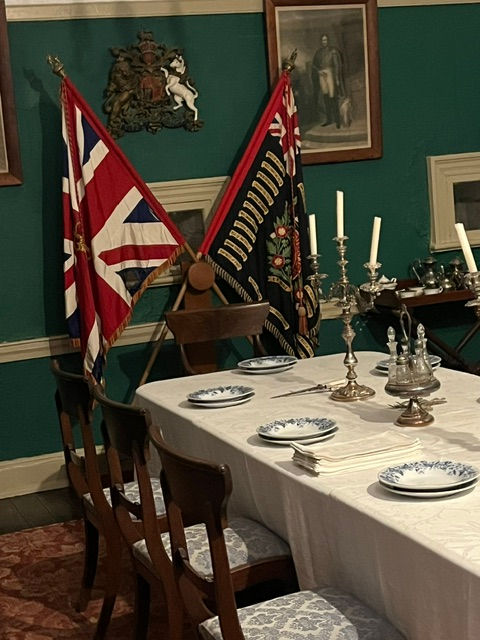
Fort Henry guards the access to Kingston harbour as well as to the Rideau Canal. It is situated just opposite the Canadian Military Academy and nowadays the fort is staffed by the cadets from the College. It has been beautifully and faithfully restored as a British Fort of the day, a Union Jack fluttering proudly from its flagstaff, and the guides dressed in period uniform.
There are regular demonstrations of parade ground manoeuvres, rifle and musket drills and soldiers assembling mobile cannon and firing them. The officers and men’s quarters have been restored, providing the visitor with a real feeling of the soldiers’ lives at the fort.
Nearby in Kingston, are four circular Martello towers, built at the same time for harbour defence. We have one in the centre of Sydney Harbour to defend the port against the Russians at the time of the Crimean War.
Journey to Fort Adams
By coincidence, the wedding we attended in Mystic Connecticut was close to Newport Rhode Island where my daughter and I enjoyed a few days together. We visited the amazing Gilded Age cottages, magnificent mansions built by the Morgans and the Vanderbilts in the later nineteenth century, - and also had an amazing evening at Harbour Court, the Newport home of the New York Yacht Club. They were quite the contrast to our next stop: Fort Adams.

Like its counterpart in Kingston, four hundred miles to the north, Fort Adams was built to protect the port in the event of another war with the British. While America had more men on the spot to fight an invasion, the British had more powerful ships and put huge pressure on the Americans during the war by raiding the seaports up and down the east coast. The Americans were unprepared.
Fort Adams built after the war at the same time as Fort Henry is like it although has its own distinctive character. However, it is nowhere near as well maintained. Visiting these two forts led me to research what else was built in response to the war of 1812. It turns out there was a huge building programme following the war of 1812, especially on the American side.
The Post-War Fort-Building Boom
In Canada, besides Fort Henry, a massive fort was built by the Royal Engineers in Quebec City between 1820 and 1831 to guard against American attacks on the most important city in Canada at that time. In Halifax, Nova Scotia the key base for the Royal Navy, Fort Charlotte was rebuilt in the 1820s as well as the York Redoubt. These buildings were all hugely expensive - well beyond the resources of the small colonial government of Canada.
Exploring USA Forts
South of the border the largest fortification programme in American History continued well into the 1850s. In addition to Fort Adams, Fort Warren was built in Boston Harbour, Fort Pulaski in Savannah as well as Fort Sumter, notorious later as the place where the Civil War began.

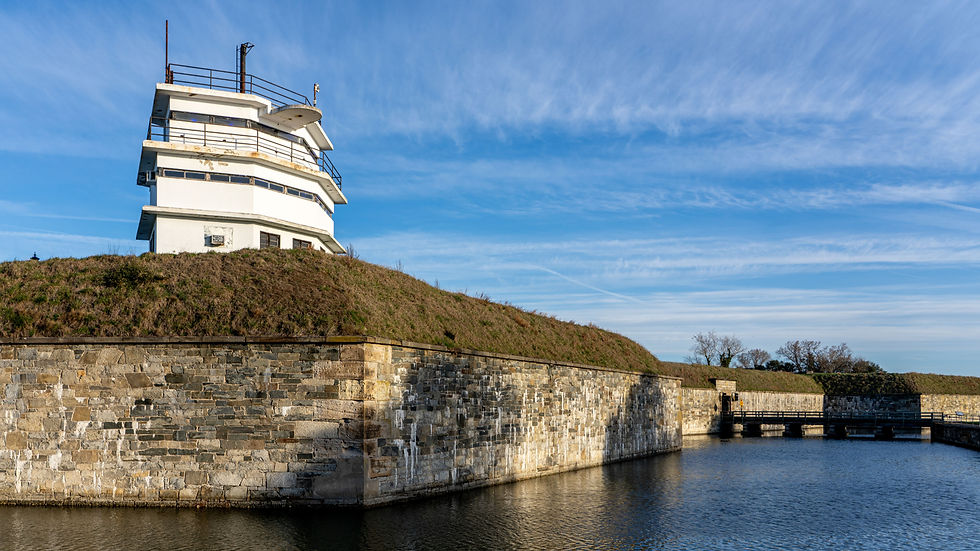
The greatest Debacle of the War of 1812 for America was the sacking of Washington by the British. To guard against a recurrence, Fort Monroe was built to command the entrance to the Hampton Roads and Chesapeake Bay. On the other side of the strait was Fort Wool to work in tandem and seal access to the Bay. It was designed to ensure no enemy fleet could sail unopposed into the Chesapeake.
Fort Monroe was the largest stone fort ever built in the United States. Its massive moat, multitiered casemates and heavy armament embodied the latest military theories of the day which became known as “The Third System”.
Was Another War Really Likely?
What do we make of this building programme? First, was there any further military threat after the War of 1812? There were several times of great tension. In the Northeast, there was a dispute over the border between New Brunswick and Maine. Shots were fired. Later there was a boundary dispute over Oregon. “54 -40” was the rallying cry on the American side referring to a border drawn to the north of the state.
Were these tensions realistic? Britain did not expect another war with the United States – it was preoccupied with its empire and Europe after the Napoleonic wars and always prepared to negotiate. Some Americans, on the other hand, saw Britain as a real strategic threat. Britain had the world’s greatest navy. Britain controlled Canada on the northern border while all the other colonies – of France, Spain and Russia – had been acquired by America. Furthermore, US military weaknesses were undeniable. Additionally, these real concerns were fuelled by emotive memories of the revolution and the humiliation of 1814 when Britain burned Washington.
This difference in perceived levels of threat was reflected in the relative investments each side made in its new forts. The cost of the British fortifications in Canada was about US$600 million at today’s money. It was costly and represented a major investment in Canadian defences, but it was not out of proportion to military expenditures elsewhere. On the American side the “Third System” cost ten times more. In today’s dollars the cost was about $6 billion and comprised 15% of the annual budget. This compares with a US defence budget of about 4% of GDP. The defence system was never tested in war and there is no evidence that the British saw the “Third System” as hostile. Only the southern forts saw military action which occurred when the country was divided in the Civil War, an irony of history hard to miss.
Historical Lesson Missed

As I continued my travels in both countries I reflected how much each country had benefitted by having a peaceful border for over two hundred years with the benefits of trade and investment going in both directions. I wish the US president had a greater understanding of his own country’s history.
To find out more about my novels and future book launches, sign up to ‘stay in touch’ on my author home page. My first novel in the trilogy, Nelson's Folly, is also available as an audiobook.


Comments